Desulfurization
Control SOx emissions. Protect your assets. Ensure compliance.
Our desulfurization solutions are designed to remove sulfur oxides (SO₂ and SO₃) from industrial gas streams, helping facilities achieve environmental compliance, reduce corrosion risks, and improve operational reliability.
Using advanced wet scrubbing and mist elimination technologies, we deliver tailored solutions for sulfuric acid production, metallurgical processes, industrial gas cleaning, and emission control applications
INTRODUCTION
Reliable SOx emission control for industrial processes
Sulfur oxide emissions remain one of the most significant environmental and operational challenges across industrial sectors.
If left untreated, SO₂ and SO₃ can contribute to acid formation, equipment corrosion, environmental compliance issues, and increased operational risk.
Our desulfurization systems are engineered to efficiently remove sulfur compounds while protecting critical equipment and ensuring long-term plant performance.
CHALLENGES
Industry challenges

SOx Emission Compliance
Environmental regulations continue to impose increasingly strict limits on sulfur oxide emissions.
✅ Our solution:
Advanced wet scrubbing systems reduce SO₂ and SO₃ emissions to help facilities achieve regulatory compliance and meet environmental targets

Acid Mist & Corrosion
Sulfur compounds can generate acid mist and corrosive conditions that damage ducts, stacks, heat exchangers, and process equipment.
✅ Our solution:
Integrated scrubbing and mist elimination technologies prevent acid carryover and protect valuable plant assets.

Operational Reliability
Unexpected shutdowns caused by fouling, corrosion, or emission exceedances increase maintenance costs and operational risk.
✅ Our solution:
Engineered gas treatment systems deliver stable performance while reducing maintenance requirements and supporting safe operation.

Equipment Protection
Acid aerosols and sulfur compounds can negatively impact downstream equipment, catalysts, and process performance.
✅ Our solution:
High-efficiency mist elimination systems prevent contamination and improve plant reliability.
HOW THE TECHNOLOGY WORKS
Three-step treatment process


PERFORMANCE
Proven desulfurization performance

Up to 99.9%
Removal efficiency.
<200 mg/Nm³
SO₂ emissions.
<10 mg/Nm³
Sulfuric acid mist.
500–100,000 Nm³/h
System capacity.
Long-term
Operational reliability.
KEY BENEFITS
Why choose desulfurization?
TYPICAL APPLICATIONS
Designed for sulfur emission challenges
FAQ
Do you have questions?
SOLUTIONS, PRODUCTS AND SERVICES
Continue exploring
Solutions
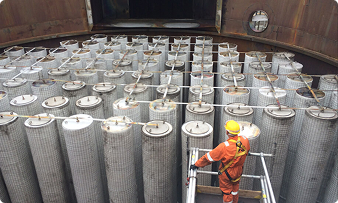
Products
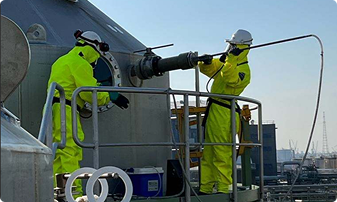
Services
GET IN TOUCH
Request a quote or speak with our experts to find the best solution for your plant.