Elessent® Brink® Fiber Bed Mist Eliminator
High-efficiency mist and aerosol removal
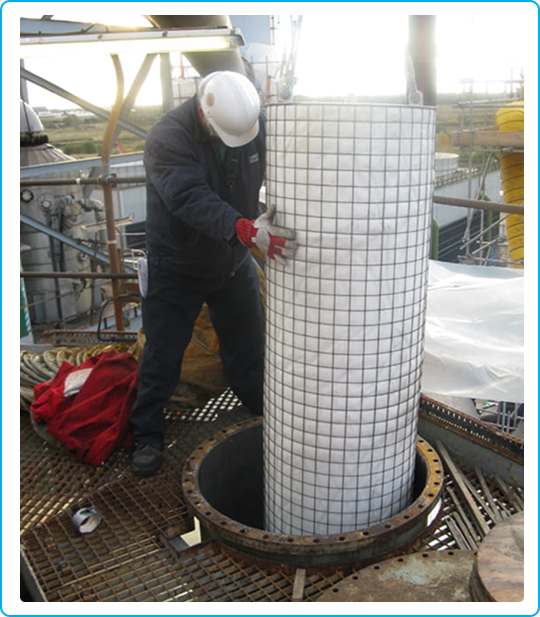
Our Brink® Fiber Bed Mist Eliminators are designed to remove acid mist, aerosols, oil mist, and submicron droplets from industrial gas streams, helping facilities improve compliance, protect equipment, and achieve exceptional removal efficiency.
WHAT IS A MIST ELIMINATOR?
Advanced aerosol filtration for industrial applications
Mist eliminators are designed to remove liquid droplets and aerosols that remain suspended in gas streams.
Unlike conventional separation technologies, fiber bed mist eliminators effectively capture submicron droplets, making them ideal for applications where regulatory compliance, equipment protection, and visible plume reduction are critical.
Commonly used for:
APPLICATIONS
Designed for challenging industrial environments
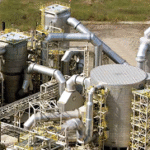
Sulfuric Acid Plants
Removal of sulfuric acid mist and SO₃ aerosols.
Chemical Manufacturing
Capture corrosive aerosols and process emissions.
Organic Mist Removal
Removal and recovery of plasticizers, oils, and condensable organics.
Acid Fume Treatment
Final-stage aerosol removal and emission control.

Industrial Odour Control
Capture aerosol-bound contaminants before polishing stages.

Metal Processing
Mist removal from pickling and surface treatment processes.
HOW MIST ELIMINATORS WORK
A Proven collection mechanism

Gas entry
Contaminated gas enters the mist eliminator vessel.

Brownian diffusion
Submicron particles migrate toward the fiber structure.

Interception
Medium-sized droplets are captured by the fiber bed.

Inertial impaction
Larger droplets collide with the fiber matrix and are retained.

Coalescence
Captured droplets merge into larger liquid droplets.

Drainage
Collected liquid drains continuously from the fiber bed.

Clean gas exit
The treated gas leaves with significantly reduced aerosol concentrations.
PERFORMANCE
Proven mist removal performance

Up to 99.95%
Mist removal efficiency
Up to 99%
Removal of submicron aerosols
Low
Pressure drop
Long service life
3–5 years typical element lifespan.
Industry-proven
Thousands of successful installations worldwide.
WHY CHOOSE BRINK® FIBER BED TECHNOLOGY?
Engineered for critical applications
AVAILABLE CONFIGURATIONS
Tailored to your process
study
Need help selecting the right Mist Eliminator?
Choosing the correct mist eliminator depends on:
Our engineering team can help determine the most suitable solution for your application.
RELATED SOLUTIONS
Mist Eliminators are commonly used in
Organic Mist Removal
Recover valuable organic compounds and reduce emissions.
Acid Fume Treatment
Control corrosive fumes and acid aerosols.
Desulfurization
Support SOx removal and acid mist control.
FAQ
Do you have questions?
SOLUTIONS, PRODUCTS AND SERVICES
Continue exploring
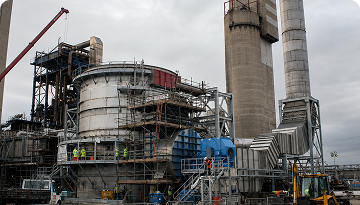
Solutions
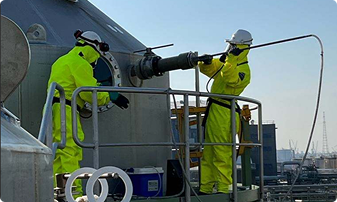
Products
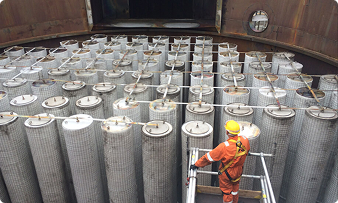
Services
GET IN TOUCH
Request a quote or speak with our experts to find the best solution for your plant.